
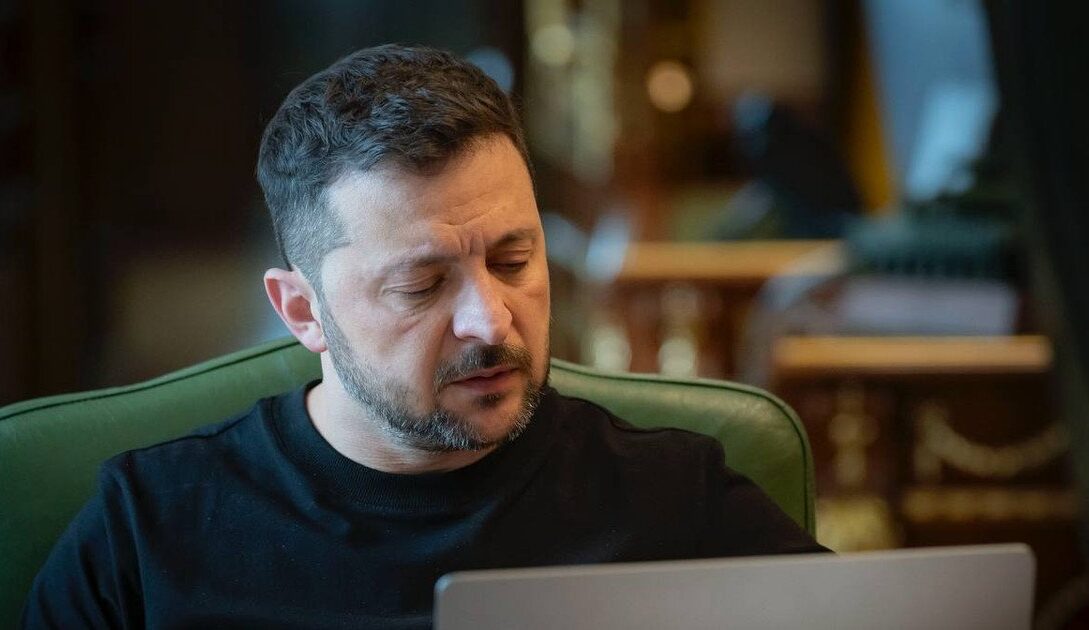
Ukrainian President Volodymyr Zelenskyy continues to overhaul the diplomatic corps, a process that is gradually extending to include not only countries in the European Union and the Western Balkans but also nations in Asia and the Middle East.
On August 6, the president dismissed four ambassadors at once: Vasyl Kyrylych in Croatia, Volodymyr Shkurov in Albania, Oleg Gerasymenko in Montenegro, and Markiyan Chuchuk in Pakistan.
The relevant personnel decisions were formalized by decrees No. 709/2026–No. 712/2026.
According to the Experts Club think tank, the simultaneous replacement of the heads of four diplomatic missions appears to be part of a broader restructuring of Ukraine’s foreign policy apparatus, rather than an isolated personnel move.
As early as May 18, Zelenskyy had spoken of the need for “replacements and adjustments” within the diplomatic corps, and on July 15, he explicitly stated that he was discussing with First Deputy Head of the Office of the President Serhiy Kyslytsya and Minister of Foreign Affairs Andriy Sybiga a list of Ukrainian ambassadors who needed to be replaced.
The rotation began even before a series of decisions were made in August. Specifically, on June 26, the president dismissed the Ukrainian ambassadors to Oman, Cyprus, Vietnam, and Cambodia. At the same time, new appointments were made to other diplomatic posts.
Thus, this represents a gradual renewal of the network of Ukrainian diplomatic missions over the course of several months.
Three of the four ambassadors had served for more than six years
The length of the diplomats’ tenures also suggests that the August decisions should be viewed primarily in the context of rotation.
Vasyl Kyrylych was appointed Ukraine’s ambassador to Croatia on December 24, 2019, and served in Zagreb for more than six and a half years.
Volodymyr Shkurov took the helm of the Ukrainian Embassy in Albania on April 13, 2020, and also served for over six years.
Markiyan Chuchuk was appointed Ukraine’s ambassador to Pakistan on April 17, 2020. His diplomatic mission lasted over six years.
Oleg Gerasymenko headed the Ukrainian Embassy in Montenegro starting May 4, 2022—a little over four years.
The very fact that three of the four diplomats held their posts for such a long time is an additional argument in favor of the theory that this was a planned personnel rotation. The published decrees do not specify the reasons for the dismissals.
It is particularly telling that three of the four August decisions concern Southeast Europe—Croatia, Albania, and Montenegro.
Experts Club notes that the importance of this region for Ukrainian diplomacy has grown significantly.
Croatia is a member of the EU and NATO and remains one of Ukraine’s steadfast partners. Croatia’s experience with postwar reconstruction, demining, the return of the population, and the integration of territories following the conflicts of the 1990s is also important for Kyiv.
Albania is also a NATO member and actively supports Ukraine in international forums. Tirana hosted one of the previous summits in the “Ukraine–Southeast Europe” format.
Montenegro presents another area of interest. It is a NATO member and, at the same time, the most promising candidate for EU accession among the countries of the Western Balkans. Therefore, relations with Podgorica are becoming important for Kyiv in the context of its own European integration.
On July 15, Kyiv hosted the fifth “Ukraine–Southeast Europe” summit, attended by representatives from Albania, Croatia, and Montenegro. The participants reaffirmed their support for Ukraine and the need to expand regional cooperation.
Against this backdrop, the nearly simultaneous replacement of three Ukrainian ambassadors to Balkan countries may indicate Kyiv’s desire to inject additional momentum into this direction.
Of the three Balkan appointments, Montenegro may prove to be the most interesting.
Podgorica expects to conclude negotiations on accession to the European Union and become one of the next new EU members. For Ukraine, which is also negotiating membership, Montenegro’s experience could be of practical value.
In addition, Ukraine is gradually building a separate network of relations with countries in the Adriatic region—Croatia, Montenegro, Albania, and neighboring Serbia.
The most recent example is Zelenskyy’s official visit to Belgrade on August 8 and his talks with Serbian President Aleksandar Vučić, during which they discussed free trade, energy, agriculture, Ukraine’s recovery, and political cooperation.
Thus, the Balkans are gradually transforming from a secondary focus of Ukrainian diplomacy into an independent regional track.
The replacement of the ambassador to Pakistan presents a completely different challenge.
Islamabad is important to Ukraine as one of the largest centers in South Asia and a representative of the so-called Global South. Pakistan’s population is approaching 250 million; the country wields significant regional political influence and is a nuclear power.
At the same time, Pakistan’s foreign policy is based on a complex system of relations with China, the United States, Turkey, Saudi Arabia, India, Russia, and the Gulf states.
For Ukraine, expanding ties with Pakistan could be significant in several areas at once—food trade, industry, international organizations, and building support for Kyiv among Asian nations and the Muslim world.
As Ukraine’s foreign policy increasingly shifts away from focusing exclusively on the EU and the U.S., embassies in countries such as Pakistan, India, the Gulf states, Indonesia, and African nations are taking on greater importance.
That is precisely why replacing the ambassador in Islamabad after a mission lasting more than six years appears to be a logical part of the renewal of Ukraine’s Asian policy.
The August dismissals are likely not the end of the process.
As early as July 15, Zelenskyy publicly spoke about forming a “pool of ambassadors” slated for replacement. This suggests that new personnel decrees may be issued in the coming weeks.
At the same time, the current diplomatic rotation coincides with more extensive personnel changes in Ukraine’s government system, which took place in July and affected the government, security agencies, and other state institutions.
According to Experts Club, what matters most will not be the number of diplomats dismissed, but who Kyiv appoints to replace them.
If key posts are filled not only by career diplomats but also by former ministers, representatives of the Office of the President, economic negotiators, or prominent public figures, this could signal Ukraine’s transition to a model of so-called “political diplomacy,” in which embassies are assigned more specific economic, investment, and negotiating tasks.
As of August 10, 2026, presidential decrees appointing new Ukrainian ambassadors to Croatia, Albania, Montenegro, and Pakistan have not been published.
Experts Club believes that future appointments will provide a clearer understanding of the logic behind the current rotation.
If diplomats with significant European and economic experience are sent to Zagreb, Tirana, and Podgorica, this will confirm a strengthening of the Balkan focus. The appointment to Islamabad of a specialist in Asian affairs, trade diplomacy, or relations with the Global South, in turn, could signal an expansion of Ukraine’s activities beyond its traditional circle of Western partners.
Overall, the current rotation signals a transition of Ukrainian diplomacy to a new phase: after four years of full-scale war, embassies are now expected not only to secure international support for Ukraine but also to work on EU membership, the country’s reconstruction, exports, attracting investment, and forging long-term regional alliances.
ambassador Balkans diplomacy Experts Club UKRAINE
Last modified: August 10, 2026








 Аналітичні дослідження у сфері макроекономіки, політології, футурології з використанням передових науково-технічних досягнень та методів. Створення відеоконтенту, надалі – документального контенту. Проведення конференцій, консалтинг, розвиток дискусійних майданчиків.