
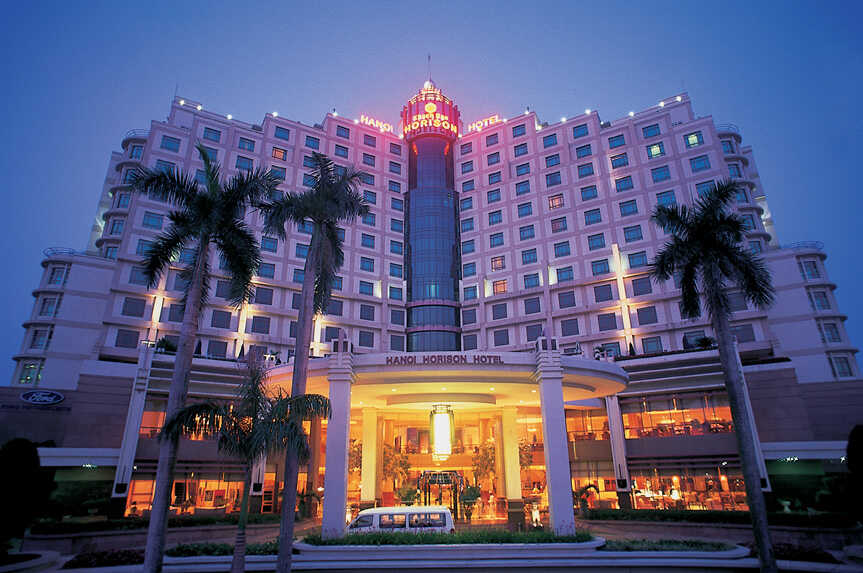
The real estate markets of Vietnam, Thailand, Cambodia, and Bali in 2026 are in different phases of the cycle, but they share one common factor—the significant role of foreign demand. At the same time, the degree of dependence on foreign buyers, the structure of supply, and price levels vary significantly among these markets.
Vietnam currently appears to be the most balanced of these markets. Here, the recovery is driven primarily by domestic demand, while foreigners play an important but not dominant role. In Hanoi, the average price of new apartments has already reached about $3,800 per square meter, while in the coastal city of Da Nang, the primary market stands at $2,200–2,300 per square meter. Foreigners can only purchase housing in approved commercial projects, cannot directly own land, and their share is limited by quotas, specifically to 30% of the apartments in a single condominium.
This is precisely why Vietnam remains largely a market for local buyers, while foreign demand is concentrated in the premium segment and in the largest cities. Among the key foreign groups in the market, citizens of South Korea, China, Singapore, Japan, and some overseas Vietnamese are typically cited. Russians are present mainly in resort locations, primarily in Nha Trang, while Ukrainians are also found among renters and individual buyers, but their share in publicly available statistics is not disclosed and remains niche.
Thailand, on the other hand, is much more dependent on external demand, especially in the condominium segment. According to REIC, in 2025, foreigners completed 14,899 condominium transactions, which is 2.2% more than the previous year. They accounted for 14.7% of all property transfers by volume and 25% by value. Chinese buyers retained the top spot among foreign buyers, Myanmar moved up to second place, and Russia remained among the largest groups.
In terms of prices, Thailand is significantly more expensive than Vietnam, especially in the capital and major resort areas. In Bangkok, the average price of condominiums in early 2026 was estimated at approximately $4,200–4,300 per square meter, and in central districts, the price was even higher. In Phuket, the median price of condominiums as of 2025 was about 144,000 baht per square meter, which corresponds to approximately $4,000 per square meter at the current exchange rate. The law allows foreigners to own units in condominiums but not the land, with the foreign quota in a project limited to 49% of the total area.
In Thailand, the role of foreigners is already directly influencing market dynamics in Bangkok, Pattaya, and especially Phuket. Russians remain one of the most prominent groups of buyers in resort regions, while Ukrainians, although not officially in the top 10, are considered by market estimates to be among the most active second-tier buyers and are primarily active in resort real estate.
Cambodia appears to be a riskier market, but also one more dependent on foreign capital. Following a boom and subsequent downturn, the market in Phnom Penh and Sihanoukville is recovering more slowly than in Thailand or Vietnam. In Phnom Penh, prices for condominiums in the business district are around $2,746 per square meter, and the market as a whole remains under pressure due to a high supply base and slower absorption.
The Cambodian market has historically been closely tied to Chinese capital, especially in Sihanoukville, and this dependence persists. Foreigners can purchase apartments but not land, making condominiums the primary vehicle for foreign investors. At the same time, there is virtually no comprehensive, up-to-date official breakdown of homebuyers by nationality available to the public. According to market reviews, the largest foreign groups remain the Chinese, as well as investors from South Korea, Singapore, and Malaysia. The presence of Russians and Ukrainians in this market remains limited and has no significant impact on the overall demand structure.
Bali occupies a special place among this quartet, as it is not a separate country but Indonesia’s most internationalized resort market. The driver here is not so much local demand as it is tourism, short-term rentals, digital nomads, and relocation. In 2025, Bali welcomed 6.33 million foreign tourists, a 9.7% increase from 2024, with Australia remaining the largest source market by visitor numbers.
Prices in Bali depend heavily on the property type and location. According to market surveys, the average selling price in 2025 was approximately $1,970 per square meter, and by early 2026, the average price in the villa market had risen to about $2,210 per square meter. At the same time, in the central areas of Badung, prices often exceeded $3,000 per square meter, and the average cost of villas, according to some surveys, rose from approximately $321,000 to $484,000 per property over 12 months. For foreigners, the primary option remains long-term leasehold, as direct land ownership is restricted.
Foreigners play a key role in Bali, but statistics on the nationalities of homebuyers here are less transparent than in Thailand. Based on tourism and market trends, Australians, British, Americans, and Russians are the most prominent. Since 2022, the market has also seen growing interest from Ukrainian citizens, primarily in the rental, relocation, and some investment purchase segments. However, as in Cambodia, there is no complete official breakdown by buyer nationality available to the public.
If we compare these four markets based on their market models, Vietnam currently appears to be the most internally stable and less dependent on foreigners. Thailand is the most transparent and institutionally developed market for foreign buyers, where the influence of foreign capital is already well-documented by statistics. Cambodia remains a more speculative market dependent on specific external groups. Bali, on the other hand, is a story of global mobility, tourism, and rental yields, where foreign demand effectively drives a significant portion of price dynamics.
In terms of price levels, capital cities and resorts also fall into different tiers. Bangkok and select projects in Phuket remain the most expensive in this group, followed by Hanoi. Da Nang and Phnom Penh fall within the mid-range price bracket, while in Bali the spread is particularly wide: from relatively affordable properties outside premium zones to expensive villas in Chang, Seminyak, and Bukit.
For an investor from Ukraine, this quartet looks like this: Thailand and Bali are the most straightforward markets for a resort strategy and rental income, but also the most dependent on external market conditions; Vietnam is more complex from a legal standpoint but has a strong domestic base; Cambodia is a potentially more profitable but also riskier market. At the same time, Ukrainians are already present in the Thai and Balinese markets, while in Vietnam they appear primarily as a niche group in resort locations.
Cambodia real estate Thailand Vietnam Балі
Last modified: March 20, 2026








 Аналітичні дослідження у сфері макроекономіки, політології, футурології з використанням передових науково-технічних досягнень та методів. Створення відеоконтенту, надалі – документального контенту. Проведення конференцій, консалтинг, розвиток дискусійних майданчиків.