
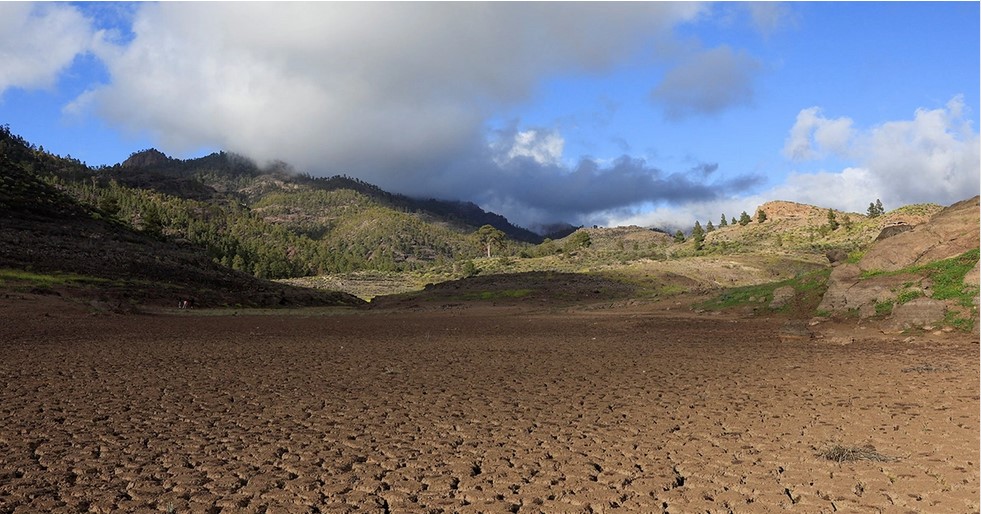
A new analysis of GRACE/GRACE-FO satellite data for 2002–2024, published by The Guardian, has revealed a steady decline in freshwater reserves in Southern and Central Europe. This applies not only to rivers and lakes, but also to soil moisture, snow, glaciers, and groundwater, which have traditionally been considered a more stable source.
From Spain and Italy to Poland and Ukraine, there is a negative trend in the “water balance” — water losses exceed replenishment.
Against the backdrop of the pan-European trend, Ukraine faces several specific risk factors at once. Scientific studies on water security in Ukraine note an increase in climate risks – from droughts to flash floods. Water shortages are already causing significant economic losses, primarily in agriculture, and are intensifying as temperatures rise and precipitation patterns change.
A joint document by experts and environmental movements on irrigation warns that if current trends continue, most of the territory could effectively turn into a single arid zone similar to the current steppe. Without modern irrigation systems, it will be impossible to grow major crops in the south, and droughts are increasingly being recorded even in the central and western regions.
The destruction of the Kakhovka hydroelectric dam in June 2023 devastated the country’s largest reservoir, which provided up to 40% of the water consumption in southern Ukraine, including drinking water supply, industry, and irrigation. Scientific assessments indicate a sharp deterioration in water supply to southern regions in the context of the already existing climatic drought.
Further research has revealed a long-term “toxic” effect: tens of thousands of tons of heavy metals and pollutants have begun to be released from bottom sediments, posing long-term risks to the rivers and ecosystems of the lower Dnieper and the Black Sea.
A number of communities in the south and east of the country, especially in the combat zone, are already experiencing local “water crises” – from interruptions in drinking water supply to problems with water supply for irrigation and industry. Military destruction exacerbates the overall climate trend towards scarcity.
Ukraine has formally recognized water as one of the key priorities for climate adaptation. Water management is being transferred to a basin-based approach following the European model: the Dnieper basin management plan was developed with EU support and is being used as a template for the country’s eight other river basins. Agricultural policy until 2030 specifically stipulates the development of water supply systems for irrigation, the transition to climate-oriented agriculture, and more efficient water use.
However, there remains a large gap between the strategies on paper and the actual state of the networks, canals, wells, and treatment facilities. In the context of war, the resources of the state and local communities are limited, while demand for water—from the agricultural sector to IDPs and frontline cities—is growing.
Against the backdrop of Europe-wide “drying up” and the trend identified in the study towards the depletion of water resources in Central and Eastern Europe, including Ukraine, the country is effectively under double pressure: climatic and military.
Water is becoming not only a resource but also an element of national security. This means that water infrastructure, groundwater protection, and restoration after the destruction of the Kakhovka hydroelectric power plant must be placed on a par with energy security and defense. Recovery and European integration projects must include a rigorous “water check” — from new agricultural programs to industrial policy. International funding for reconstruction and climate adaptation should logically be linked to reforms in water management, transparency of water use, and modernization of irrigation, especially in the southern regions.
Satellite data on the “drying up” of Europe is transforming the issue of water in Ukraine from a background issue to one of the key issues for the future – from harvests and exports to population density and climate resilience.
Last modified: December 2, 2025







 Аналітичні дослідження у сфері макроекономіки, політології, футурології з використанням передових науково-технічних досягнень та методів. Створення відеоконтенту, надалі – документального контенту. Проведення конференцій, консалтинг, розвиток дискусійних майданчиків.