
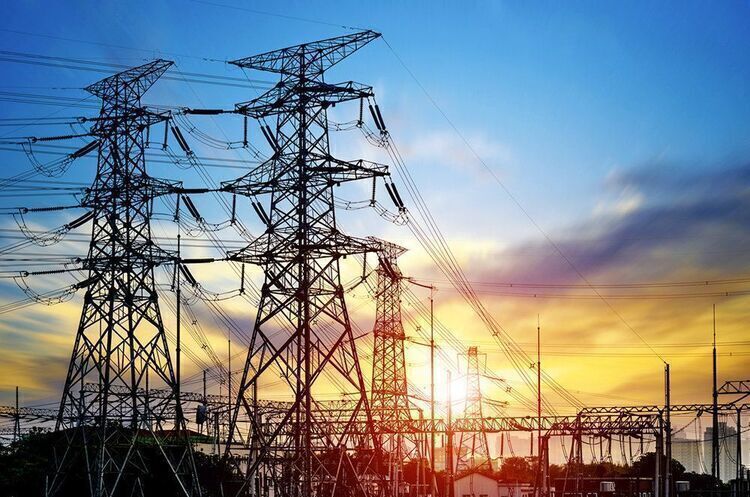
Ukraine imports record amounts of electricity from the EU, but millions of consumers still sit without power for 12-16 hours or more. In other words, there are imports, but no electricity. This raises a logical question: where are the megawatts “lost”?
However, the paradox is easily explained: imports are not “light in the socket,” but only an additional source of power. For electricity to reach a particular neighborhood or building, highways, substations, and distribution networks must be operational—and that is where the biggest problems lie today.
The issue is further exacerbated by the fact that after large-scale shelling in early December, the capacity of nuclear power plants (which are the base generation of the Ukrainian power system) was reduced. According to the IAEA, damage to the networks led to the shutdown of some units or their transfer to reduced capacity. Therefore, the topic of imports has recently been discussed very actively at all levels.
The unvarnished figures: imports are growing, exports are falling
November already showed a systemic gap. Electricity exports fell by 94% compared to October 2025, to 5.3 thousand MWh, and have virtually stopped since November 11. Recall that in October, Ukrainian electricity exports fell by 85% compared to September. Imports, on the contrary, increased by 17% to approximately 415,000 MWh, reaching their highest level since the beginning of the year.
Data for December is not yet available, but it is already clear that Ukraine remains a net importer of electricity for the second month in a row. The structure of supplies has changed somewhat: as in October, Hungary is the largest supplier (about 44%), but the shares of Slovakia (10 times) and Moldova (2 times) have increased significantly. At the same time, Poland and Romania have “slipped” in the structure of “electric” imports.
From December 1, the maximum available import cross-section was increased from 2.1 to 2.3 GW, but it should be noted right away that both figures are still more theoretical. After all, the average actual use of the cross-section in November was only about 27%, with peaks of up to 88% at certain hours.
Megawatts are stuck in the grid: five reasons
In other words, the resource is there, but not always where and when it is needed. There are several main reasons why even the available electricity does not reach the end consumer.
- Damaged west-east corridors. Massive shelling destroys high-voltage lines and key substations, making it physically difficult to pump imported electricity from the west to the center, east, and south of the country.
- Domestic generation deficit during peak hours. Evening consumption is not covered by weak generation and supply reserves. Imports help to some extent, but they cannot meet the need for maneuvering capacity, especially where local networks are damaged.
- Problems with balancing the system. The power system dispatcher (Ukrenergo) cannot rely solely on imports: local reserves are needed to maintain frequency and respond to peak loads.
- Priorities for power supply. When there is a shortage of capacity, critical facilities such as hospitals, water utilities, and transport are given priority. Households are subject to stricter hourly power cut schedules (HPCS).
- Equipment supply and logistics. Transformers, circuit breakers, and cable fittings are expensive and take a long time to manufacture. Warehouses are running low, and without them, there is no reserve to quickly “unravel” bottlenecks.
The market responds to shortages with prices. In November 2025, the Ukrainian day-ahead market became one of the most expensive in Europe (with a price of around €140 per MWh), while in Sweden the price was around €36/MWh and in France, for example, €43/MWh.
This is not about the “greed” of sellers and suppliers, but about the lack of cheap domestic supply and network constraints.
European background: someone else’s surplus is not our insurance
The EU is increasing inter-state flows, which lowers prices and adds flexibility. In 2024, France increased its nuclear and hydroelectric power generation and became the largest net exporter in the region.
But even France’s record surplus is not an automatic “magic bullet” for Ukraine. The reason is asymmetry of time and place: surpluses often occur at times when we have a different load profile, and at nodes from which we cannot quickly “pump” megawatts.
Some EU countries also have electricity surpluses, especially during so-called solar and wind windows, and are also looking for places to sell their surpluses. But the same problems arise: complex logistics (both in the EU and in Ukraine) and load asymmetry.
In other words, imports can be very useful, but they should not be seen as a strategy to replace our own maneuverable capacity.
When blackouts may decrease
However, the current situation is not hopeless. Ukrenergo expects a gradual reduction in restrictions as damaged facilities are repaired and there are no new attacks.
The government is synchronizing restoration, construction of protective structures, creation of fuel reserves, and connection of cogeneration plants to the grid. This will add local capacity where it is most needed.
The effect of increasing the cross-section to 2.3 GW is there, but it is limited by internal nodes. The closest practical relief will come from connecting decentralized sources and restoring networks.
No illusions: how to reduce blackouts
In the coming weeks, the focus will be on speed and accuracy. First of all, it is necessary to restore throughput capacity in critical corridors and key substations, where a single replacement of a transformer or circuit breaker returns tens of megawatts to the city.
Mobile substations, field crews, and “hot” equipment logistics are a matter of hours and days, not months.
At the same time, cogeneration, gas piston, and gas turbine units need to be connected to the grid in areas where there is a shortage. Where “black holes” of evening peak demand appear on the map, local generation can “pick up” the load.
In the next few months, the transition to managed demand will become key. Industry and large commercial consumers are capable of “smoothing out” the load according to clear rules and compensation. This is not an abstraction: power restriction schedules (PRS) are already in place, but they need to be transformed into civilized DR (demand response) programs with a predictable effect.
It is also necessary to continue creating additional “west-east” corridors, additional switching nodes in the 330-750 kV network, and local reserves around megacities and large substations. Energy storage devices in large nodes support the system during 2-3 peak hours and reduce the duration of power cuts.
In the long term, more game-changing capacity is needed. We need 3.5-4 GW of new decentralized maneuverable generation, as close as possible to the consumer. Gas installations, cogeneration clusters for heat and electricity, microgrids for critical areas — all this makes the system less dependent on one or two nodes.
Engineering logic must go hand in hand with institutional logic: transparent corporate governance, stable payment rules, and rapid procurement of critical equipment. Without trust, there will be no financing; without financing, there will be no underground distribution points, reinforced intersections, or warehouses with backup transformers.
What does “fewer outages” mean in practice?
Don’t expect a magic button that will turn off the GPV overnight. A realistic scenario is a gradual reduction in the duration and severity of outages in regions where:
– at least part of the west-east trunk lines have been restored;
– local cogeneration/gas installations are connected;
– demand management programs for businesses are in place;
– critical infrastructure is provided with reserves.
This is a “mosaic of solutions”: each piece separately does not save the day, but together they have a tangible effect.
Conclusion without self-deception
Imports with a potential of 2.3 GW may be a temporary salvation, but they are by no means a panacea. As long as high-voltage lines and power transmission nodes are damaged, imported megawatts will not turn into light in homes.
The path to shorter outages lies in three quick actions:
- quickly repair transformers and power lines;
- quickly connect decentralized generation;
- quickly launch managed demand and local reserves.
At the same time, it is necessary to invest in our own maneuvering capacity and the development of central and local networks. Record imports are a symptom of an open wound. It is not treated with intersection figures, but with systematic rehabilitation of networks and a return of trust in the rules of the game.
Last modified: December 24, 2025










 Аналітичні дослідження у сфері макроекономіки, політології, футурології з використанням передових науково-технічних досягнень та методів. Створення відеоконтенту, надалі – документального контенту. Проведення конференцій, консалтинг, розвиток дискусійних майданчиків.