

The escalation of the war around Iran has already gone beyond a regional conflict and has become a factor in global inflation. On March 9, Brent rose above $119 per barrel during the day, its highest level since 2022, and IMF chief Kristalina Georgieva warned that a sustained 10% increase in oil prices could add about 0.4 percentage points to global inflation. The scale of the risk is also explained by logistics: in 2024, about 20 million barrels of oil per day passed through the Strait of Hormuz, which is about 20% of global consumption of liquid hydrocarbons.
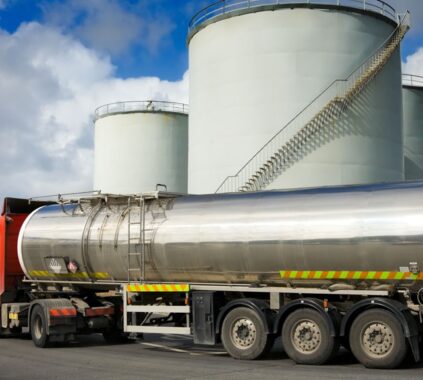
For Ukraine, the fastest channel for transmitting such a shock is the fuel market. After losing a significant part of its own refining capacity, the country relies on imports: in 2024, Ukraine imported about 1.2 million tons of gasoline, and in January-September 2025, imports of petroleum products reached 5.67 million tons. Even before the current price surge, the market remained sensitive to logistics and external conditions: the NBU noted an acceleration in the growth of prices for gasoline, diesel, and liquefied gas due to supply disruptions, and Reuters reported that in January 2026, gasoline imports rose 70% year-on-year due to a lack of domestic production. This makes gasoline, diesel, and autogas the most likely first group of goods to react to a prolonged oil shock.
“If the conflict around Iran drags on, Ukraine will feel it almost immediately through rising fuel costs, and then through higher logistics, import, and food prices. For our economy, this is not only an external shock, but also additional inflationary pressure on the domestic market,” says Maksim Urakin, founder of the Experts Club analytical center and candidate of economic sciences.
The second vulnerable group is imported products with long logistics and a high share of transport costs. In 2025, Ukraine increased its imports of agri-food products by 13% to $9.12 billion, with the EU’s share exceeding 53.9%. The largest items in the procurement structure were fruits, berries, and nuts ($1 billion), fish and seafood ($999 million), alcoholic and non-alcoholic beverages ($870 million), cocoa products ($640 million), coffee, tea, and spices ($471 million), and vegetables ($467 million). These categories—from bananas and citrus fruits to coffee, chocolate, and seafood—are the most sensitive to increases in freight, fuel, refrigeration logistics, and dollar-denominated commodity prices.
“Consumers will feel the price increases most acutely in areas where imports and transportation account for a large share of the cost. First of all, this applies to fuel, coffee, chocolate, fish, seafood, and fruit, and a little later to goods whose prices include more expensive fertilizers, gas, and packaging,” Urakin noted.
The third risk area is fertilizers and then Ukrainian-produced food. There has already been an increase in prices not only for oil and gas, but also for sugar, fertilizers, and soybeans following the escalation around Iran. At the same time, European gas prices jumped by 35-40% in early March, and the EU convened a coordination group on gas supplies. This has a double impact on Ukraine: the NBU previously estimated the need for gas imports in 2026 at $1.1 billion after $2.9 billion in 2025, while fertilizer imports in 2025 increased to 3.285 million tons.
According to GIZ estimates, Ukraine’s dependence on nitrogen fertilizer imports has already exceeded 60%. This means that if oil and gas prices remain high for a long time, in a few months the pressure may shift to the cost of grain, greenhouse vegetables, milk, meat, and other food products.
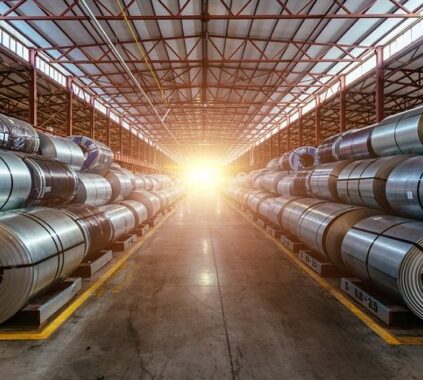
Products related to petrochemicals and metals deserve special mention. Oil is the basic raw material for a wide range of chemical products, and Reuters has already noted that aluminum prices have risen to a four-year high amid the current conflict. This increases the risk of price increases for plastic packaging, household chemicals, paints, certain types of cosmetics, tires, PVC materials, and some construction products. The same applies to bitumen, a direct petroleum product, whose imports to Ukraine, according to industry estimates, will remain significant in 2026.
The currency factor could be an additional amplifier. Against the backdrop of the war, investors are turning to the dollar as a safe haven asset. This is important for Ukraine because oil, gas, coffee, cocoa, fertilizers, and a significant portion of other imports are denominated in dollars, and the EU remains the country’s largest trading partner, accounting for more than 50% of trade in goods. Even without a physical shortage, this increases the risk of more expensive imports in hryvnia.
However, not all goods will react equally quickly. Basic products, where Ukraine remains a major producer — primarily wheat, corn, and sunflower oil — are less dependent on immediate imports, and the wheat and corn harvest in 2025 turned out to be better than early expectations.
Therefore, in the short term, fuel, imported fruits and seafood, coffee and chocolate, fertilizers, chemicals, and some building materials may experience the strongest price increases. But if the energy shock drags on, the rise in logistics costs will almost inevitably begin to seep into the prices of Ukrainian-made goods.
Analysis fuel goods Imports War Іран Уракін
Last modified: March 9, 2026










 Аналітичні дослідження у сфері макроекономіки, політології, футурології з використанням передових науково-технічних досягнень та методів. Створення відеоконтенту, надалі – документального контенту. Проведення конференцій, консалтинг, розвиток дискусійних майданчиків.