
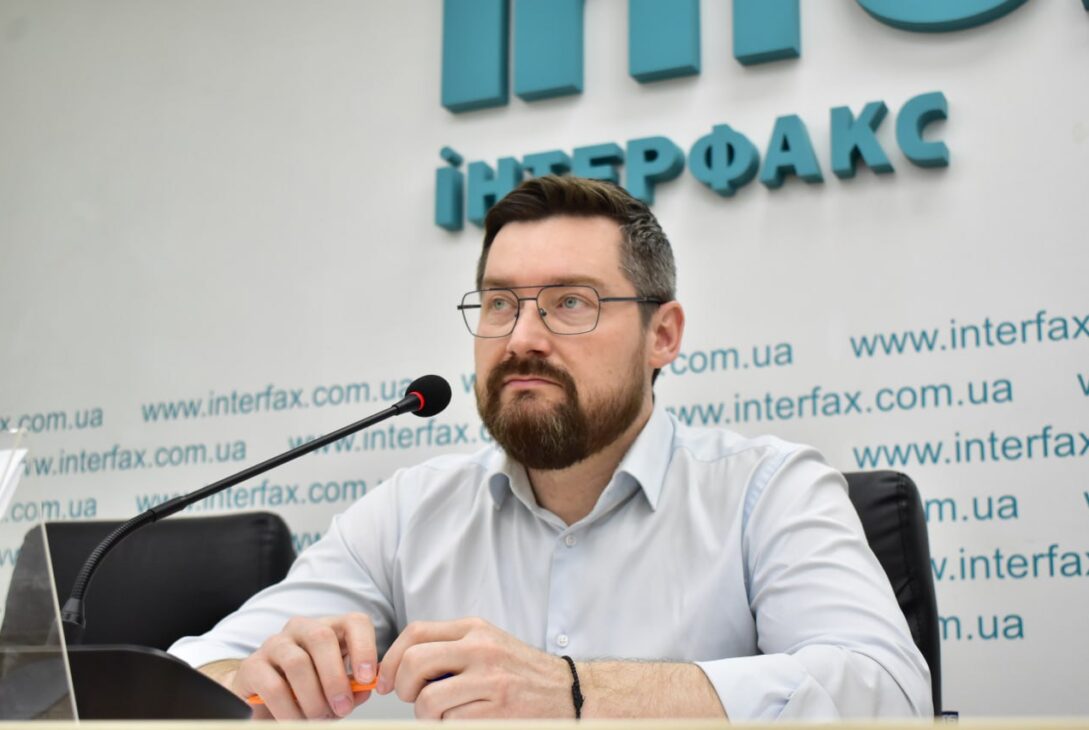
This article presents key macroeconomic indicators for Ukraine and the global economy as of the end of September 2025. The analysis is based on current data from the State Statistics Service of Ukraine (SSSU), the National Bank of Ukraine (NBU), the International Monetary Fund (IMF), the World Bank, and leading national statistical agencies (Eurostat, BEA, NBS, ONS, TurkStat, IBGE). Maksim Urakin, Director of Marketing and Development at Interfax-Ukraine, PhD in Economics and founder of the Experts Club information and analytical center, presented an overview of current macroeconomic trends.
Ukraine’s macroeconomic indicators
During the first nine months of 2025, Ukraine operated in a “managed economy” mode, maintaining its adaptability to wartime restrictions, but the pace of recovery remained moderate and the investment momentum insufficient. The NBU’s baseline forecasts in the summer of 2025 included a target for real GDP growth in 2025 of 2.1%, which set the framework for business and financial sector expectations for the second half of the year.
“Based on the results for January–September 2025, Ukraine’s economy is showing its ability to maintain basic activity under military restrictions. The recovery is continuing, but its pace remains moderate and is largely based on consumption and external financing. According to market observations, investment activity is mainly focused on restoration and replacement rather than capacity expansion. The key task for the coming quarters is to increase the share of long-term projects in the energy, logistics, processing, and technology sectors,” said Maksim Urakin, founder of the Experts Club information and analytical center.
Inflation dynamics in September were more subdued than during the peak periods of the year. According to the State Statistics Service, consumer prices rose by 0.3% m/m in September 2025, by 6.3% since the beginning of the year, and annual inflation (September 2025 to September 2024) was 11.9%. Core inflation was higher on a monthly basis: +1.3% m/m, and on an annual basis: 11.0% y/y.
Monetary policy remained tight and aimed at keeping expectations in check: on September 11, 2025, the NBU kept its policy rate at 15.5%. At the same time, the NBU’s inflation report laid out the logic of maintaining the rate at 15.5% until the fourth quarter of 2025 as part of a disinflationary trajectory and exchange rate stability.
“Inflation dynamics in 2025 will be determined not only by monetary factors, but also by supply factors—harvests, logistics, energy constraints, and the import component of costs. In these conditions, keeping the discount rate high serves to contain inflation expectations and reduce pressure on the currency market. At the same time, monetary measures must be complemented by government policies that stimulate competition and supply in the domestic market. Without this, inflation risks will remain sensitive to price and logistics shocks,” emphasized Maksim Urakin.
Foreign trade remained one of the key sources of macro risks. According to the State Statistics Service, in January–July 2025, exports of goods amounted to $23.31 billion (96.5% of the corresponding period in 2024), while imports amounted to $45.94 billion (116.9%). The negative balance amounted to $22.63 billion, reflecting the structural gap between import demand (energy, equipment, critical goods) and export opportunities.
International reserves remained a compensator for military risks and trade imbalances. According to the NBU, as of October 1, 2025, international reserves amounted to $46.52 billion, having increased in September; the NBU also noted that this amount corresponded to the financing of 5.1 months of future imports.
The debt burden remained high. According to data publicly cited with reference to the Ministry of Finance, as of September 30, 2025, the state and state-guaranteed debt amounted to UAH 8,024.1 billion (equivalent to $194.2 billion); of which external debt amounted to UAH 6,063.2 billion and domestic debt amounted to UAH 1,960.9 billion.
Global economy
In 2025, the global economy continued on a moderate growth trajectory, but at different speeds across regions and with increased sensitivity to trade and financial risks. According to the July update of the IMF’s World Economic Outlook, global growth in 2025 was estimated at 3.0% and in 2026 at 3.1%, explained by a combination of financial conditions and trade lead-through effects.
World Bank materials emphasized that the outlook remains fragile due to increased trade barriers and high uncertainty; in the baseline scenario, after a slowdown, growth was expected to pick up to around 2.5% in 2026–2027.
“The global economy in 2025 is growing moderately and unevenly across regions, with financial conditions and trade risks remaining key variables. The US is supporting part of global demand, but dependence on the cost of money and the consumption cycle remains. The European economy is recovering slowly, while China is showing growth driven by industry and exports, with uneven domestic demand. For Ukraine, this means the need to focus on competitive niches and systematic support for exports with higher added value, rather than waiting for favorable external conditions,” said Maksim Urakyn.
According to the BEA’s third estimate, real US GDP grew by 3.8% on an annualized basis in the second quarter of 2025, while a decline was recorded in the first quarter. Among the key growth factors, the BEA cited a reduction in imports (which are deducted from GDP calculations) and an increase in consumer spending, partially offset by weaker investment and export dynamics.
According to Eurostat’s preliminary flash estimate, GDP grew by 0.1% q/q in the eurozone and 0.2% q/q in the EU in Q2 2025, indicating a very moderate recovery in economic activity.
According to preliminary estimates released by the National Bureau of Statistics of China, GDP grew by 5.3% y/y in the first half of 2025 and by 5.2% y/y in the second quarter, meaning that the economy maintained a pace of “above 5%” on an annualized basis.
According to an official government press release (PIB), India’s real GDP in the first quarter of fiscal year 2025-26 (April-June 2025) grew by 7.8% y/y, confirming one of the highest growth rates among major economies.
TurkStat reported that in the second quarter of 2025, Turkey’s GDP grew by 4.8% y/y, which formally meant an acceleration in annual growth, although the structure of demand and foreign trade conditions remained important for assessing sustainability.
“The main external risks in 2025 are related to trade restrictions, changes in regulatory regimes, energy costs, and logistical constraints. In such conditions, countries with high productivity and a diversified export structure gain an advantage in the competition for capital and markets. It is advisable for Ukraine to develop risk management tools for exporters, expand its sales geography, and increase the predictability of rules for investors. This reduces dependence on short-term fluctuations in external markets and increases the stability of the balance of payments,” emphasized Maksim Urakin.
Conclusions
January–September 2025 is a period of relative macrofinancial manageability for Ukraine: inflation slowed to 11.9% y/y in September, the NBU kept its policy rate at 15.5%, and international reserves rose to $46.52 billion as of October 1. At the same time, the trade imbalance and high debt burden continue to pose medium-term risks, which can be addressed not by “stabilization” but by structural changes—investment, productivity, processing, and exports with higher added value.
“In the medium term, the key areas are the development of processing, the localization of supply chains where economically feasible, and the expansion of exports of higher value-added products. At the same time, it is important to maintain the predictability of monetary and fiscal decisions and ensure transparent conditions for private capital. In the absence of such steps, macro stability will remain primarily a function of external financing. If these steps are taken, they can become the basis for a longer investment cycle and a more sustainable economic structure,” concluded Maksym Urakin.
Head of the Economic Monitoring project, Candidate of Economic Sciences Maksim Urakin
Last modified: January 29, 2026










 Аналітичні дослідження у сфері макроекономіки, політології, футурології з використанням передових науково-технічних досягнень та методів. Створення відеоконтенту, надалі – документального контенту. Проведення конференцій, консалтинг, розвиток дискусійних майданчиків.